OSINT Learning Resource

Dark web websites: 10 onion sites to explore

The dark web is shrouded in mystery — but not every onion website is dangerous. Here is what onion sites are, the main types of dark web websites, and 10 relatively safe ones you can explore.

Educational purpose only. This guide is published for cybersecurity education. Hack The Planet courses teach lawful OSINT techniques for defensive research — never use this knowledge to access illegal content or services.

What are onion sites?

Onion sites, or dark web websites, are sites on the dark web that can typically only be accessed using special software like the Tor browser. They use .onion domains — random letters and numbers up to 56 characters long. They won't show up on Google, but they are indexed by dark web search engines such as Torch.

The dark net's layered encryption and routing protocols offer stronger anonymity, making onion sites appealing to whistleblowers, political dissidents, privacy advocates — and, inevitably, cybercriminals. Traffic is routed through multiple server nodes that don't log activity, obscuring the user's origin. For added privacy, many people access Tor over a VPN.


Types of dark web websites

Autoshop marketplaces

Illicit online stores that mostly sell stolen data — login credentials, financial details, PII, or corporate email addresses. They are called "autoshops" because they run automatically: buyers pay with cryptocurrency and the system instantly delivers the purchased data.

Escrow marketplaces

Like autoshops, escrow marketplaces are commonly used for shady transactions, but the payment mechanism differs: a trusted third party (often the marketplace itself) temporarily holds the buyer’s payment in escrow until they confirm receipt of the goods or services.

Hacking forums

Communities where hackers exchange knowledge, share hacking tools, and discuss vulnerabilities or exploits. They may share leaked personal information or phishing tutorials. Some are private and invite-only; others are massive open discussion boards.

Ransomware leak sites

Ransomware groups use dedicated leak sites (DLS) to publish stolen data and pressure victims into paying. Ransomware attacks are surging year over year, which is why monitoring and defense matter for every organization.

Mirrors of legitimate websites

Not all onion sites are illicit. Many reputable news outlets, social platforms, and government agencies host dark web versions of their sites to provide access for users in regions with heavy censorship or surveillance.

Whistleblower platforms

Anonymous platforms that let people share sensitive or controversial information with journalists, organizations, or the public — often used to expose corporate misconduct, government overreach, or human rights violations.

Anonymous messaging platforms

Platforms that enable encrypted, anonymous communication between users, helping protect privacy and reduce the risk of surveillance.

This list is not exhaustive — the dark net also hosts fraud services, botnet panels, piracy repositories, and extremist forums. Many dark web websites exist to trade leaked personal information, which is why dark web monitoring matters for your own digital safety.

10 safe onion sites to explore

To access them, open the Tor browser and paste the site's .onion address into it.

1

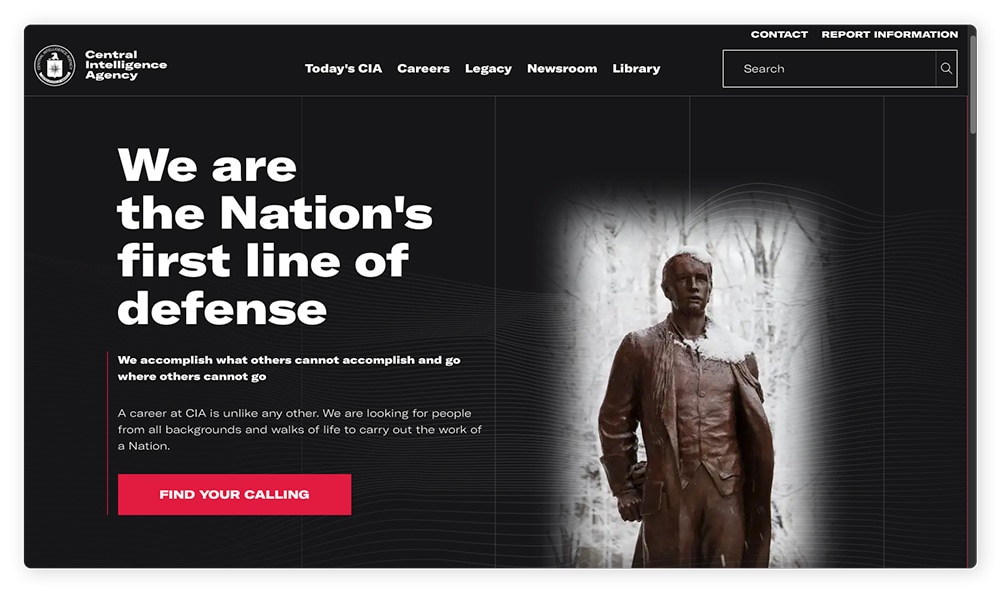
The CIA

The CIA’s onion site allows users to securely report threats or suspicious activity, especially in regions where online surveillance is common. Its presence on the dark web also supports intelligence gathering and helps track cybercriminal activity.

The CIA — dark web website illustration
2

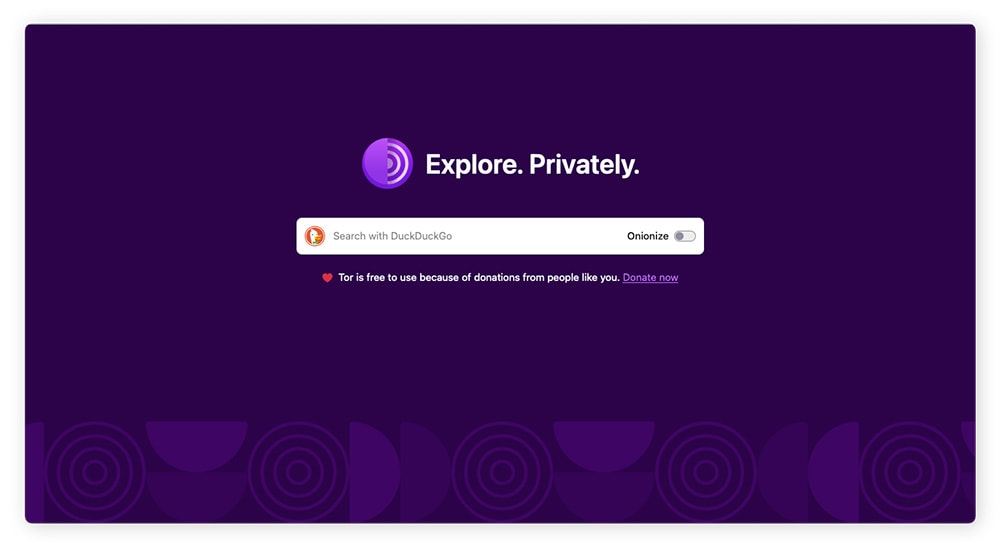
DuckDuckGo

DuckDuckGo is a privacy-focused search engine and the Tor browser’s default search engine. It doesn’t track searches or store personal data. However, DuckDuckGo doesn’t index dark web content — it only reaches surface and deep web sites through Tor.

DuckDuckGo — dark web website illustration
3

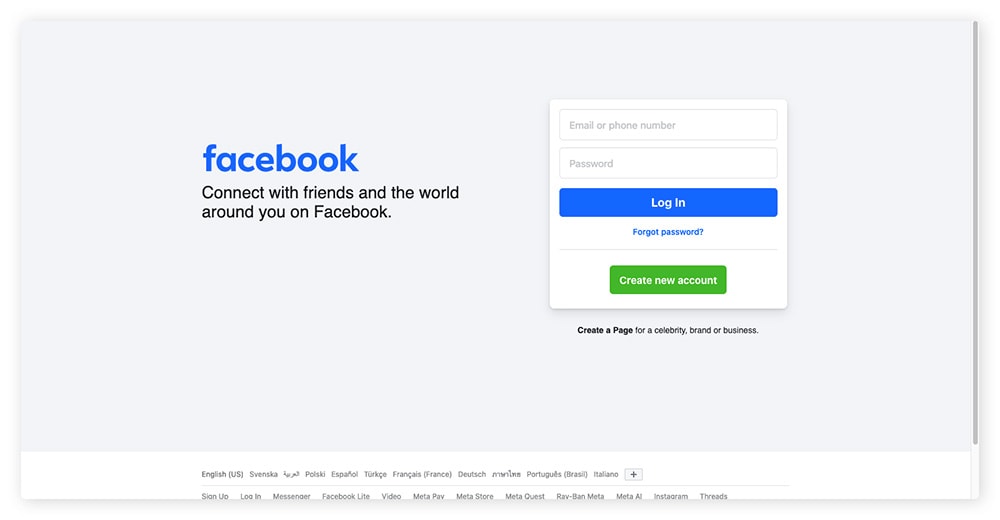
Facebook

Facebook’s onion mirror allows people to access it in countries that block the platform, so they can connect across digital borders. That said, Meta’s data collection practices may sit uneasily with the privacy principles that motivate many dark web users.

Facebook — dark web website illustration
4

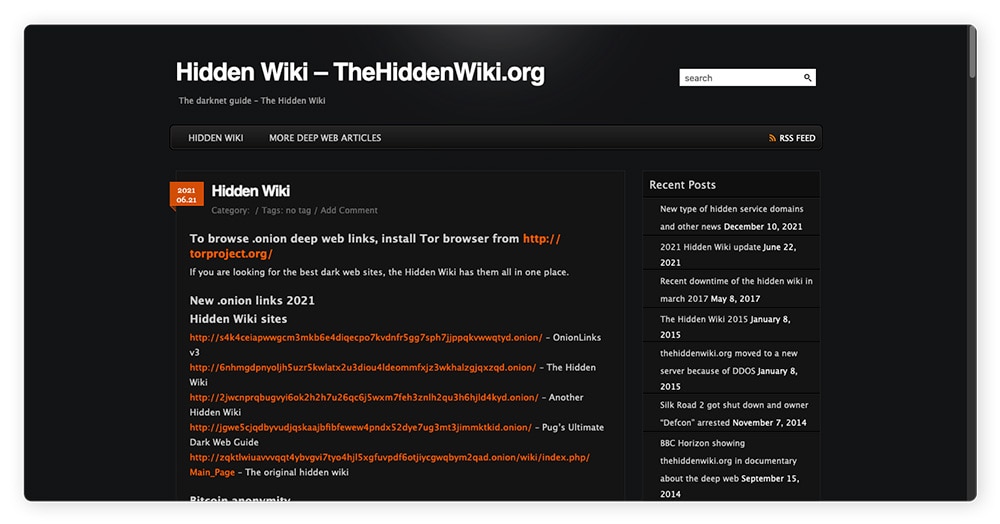
The Hidden Wiki

The Hidden Wiki is a longstanding directory of dark web sites and a common starting point for navigating onion services. Note that some Hidden Wiki links lead to unsafe content — be careful what you click and steer clear of scams and illegal activity.

The Hidden Wiki — dark web website illustration
5

ProPublica

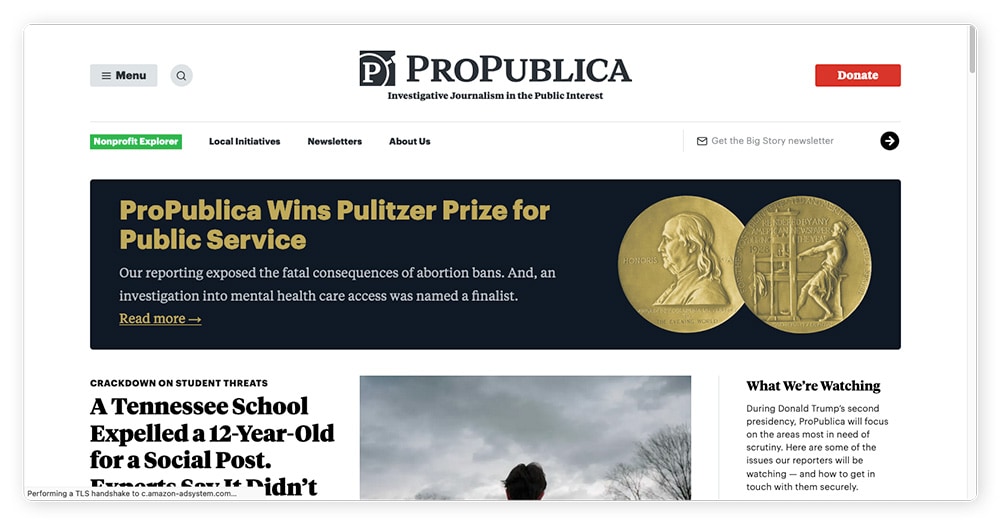
ProPublica is an investigative news site run by an independent nonprofit that exposes abuses of power and corruption. It hosts an onion site so people in countries with restricted press freedom can read its journalism. It links to no illegal content — one of the safest Tor sites to visit.

ProPublica — dark web website illustration
6

Proton Mail

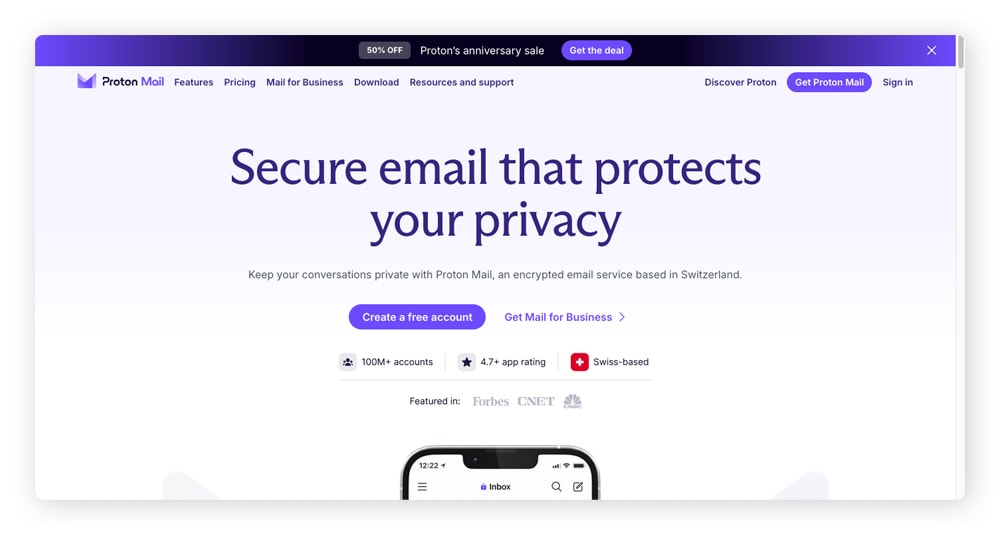
Proton Mail is an anonymous email service with an onion site — default end-to-end encryption, zero-access architecture, and minimal personal information requirements. Still essential: strong passwords and two-factor authentication.

Proton Mail — dark web website illustration
7

SecureDrop

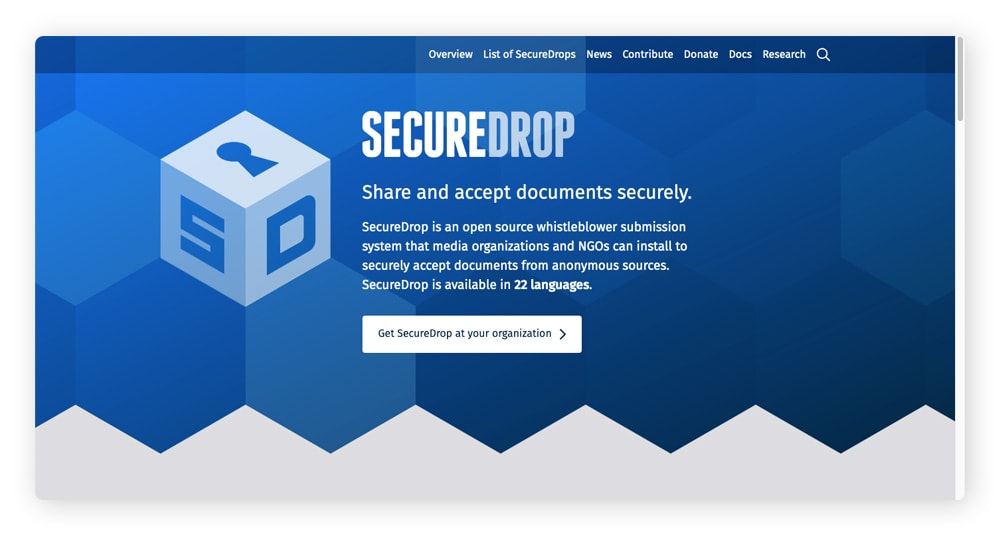
SecureDrop is an anonymous file-sharing platform designed for secure communication between whistleblowers and journalists. Major outlets like The New York Times, The Economist, and The Guardian host SecureDrop instances to give sources a safe, anonymous channel.

SecureDrop — dark web website illustration
8

Riseup

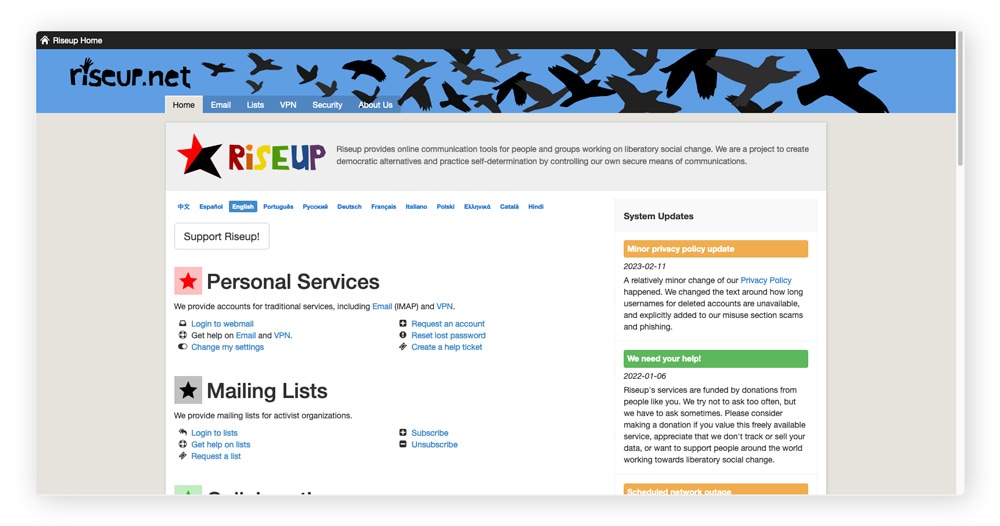
Riseup is a volunteer-run collective offering secure chat and email services, used mostly by activists and social justice communities. It runs an onion site so like-minded people can organize more securely and anonymously.

Riseup — dark web website illustration
9

Tor Metrics

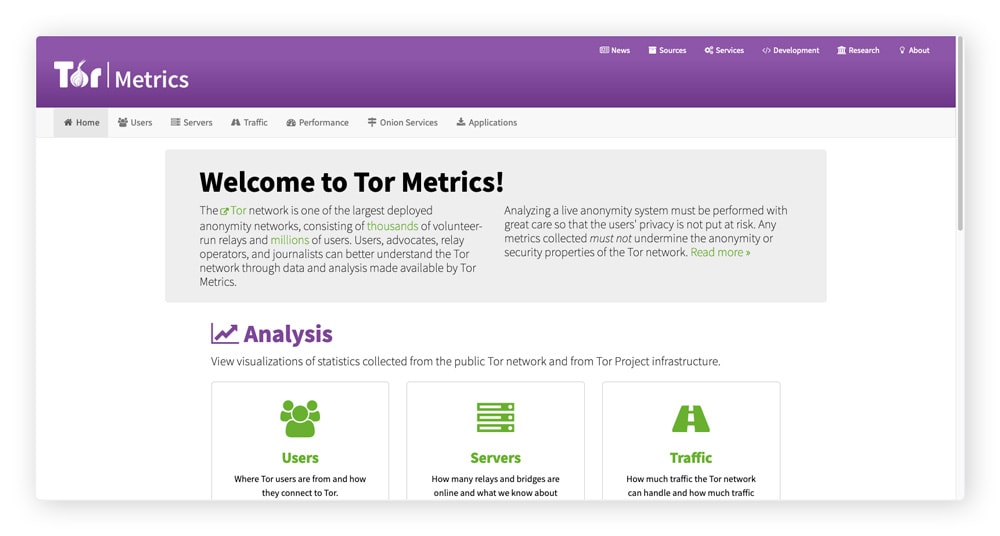
Tor Metrics is not an onion site, but it offers a fascinating peek under the hood of the dark web — tracking Tor usage by region and showing trends in access and adoption without collecting personal data.

Tor Metrics — dark web website illustration
10

Torch

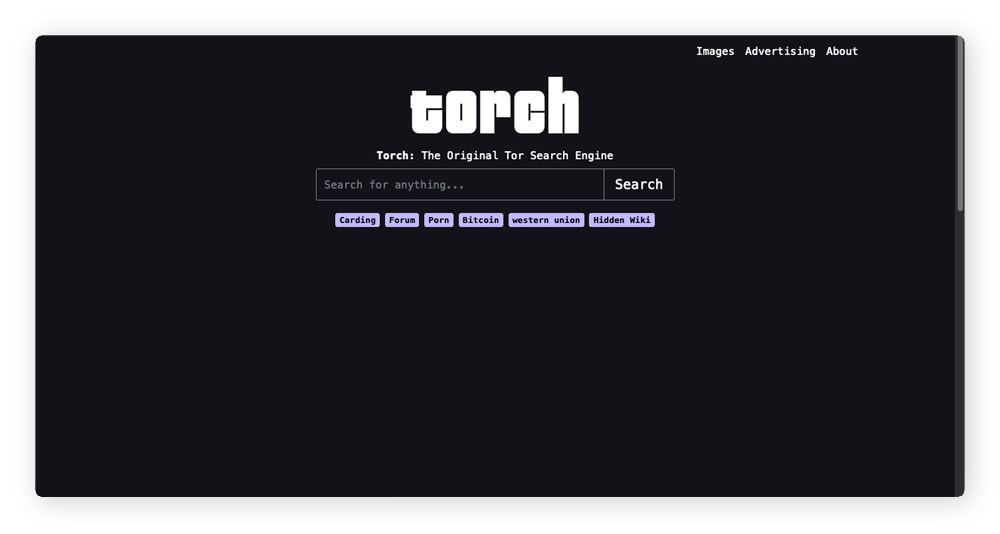
Torch is one of the most established dark web search engines, designed to help users navigate the Tor network and discover onion sites. Unlike Google or DuckDuckGo, it indexes hidden websites — but always avoid clicking unfamiliar or untrusted links.

Torch — dark web website illustration

Stay anonymous while you browse

Exploring the dark web can be eye-opening, but it is also risky without the right protection. The Tor browser boosts privacy; pairing it with a VPN adds a critical layer — ultra-secure AES-256 encryption, a masked IP address, no activity logs, and an automatic kill switch that guards against unexpected exposure if the connection drops.

Frequently asked questions

Want to master OSINT properly?

Our Understanding Tor Routing and Dark Web OSINT course teaches lawful, defensive OSINT techniques step by step.

View the OSINT course

All techniques taught are lawful and defensive — education only.